Start with where the water shows up
Damp patches, lifting tiles, flaking paint and musty smells are usually the first signs. Where they appear tells you a lot about the service you need.
- Inside, near a shower or bath: look at the wet area options below.
- On a ceiling or wall under a balcony or deck: balcony waterproofing is the likely fit.
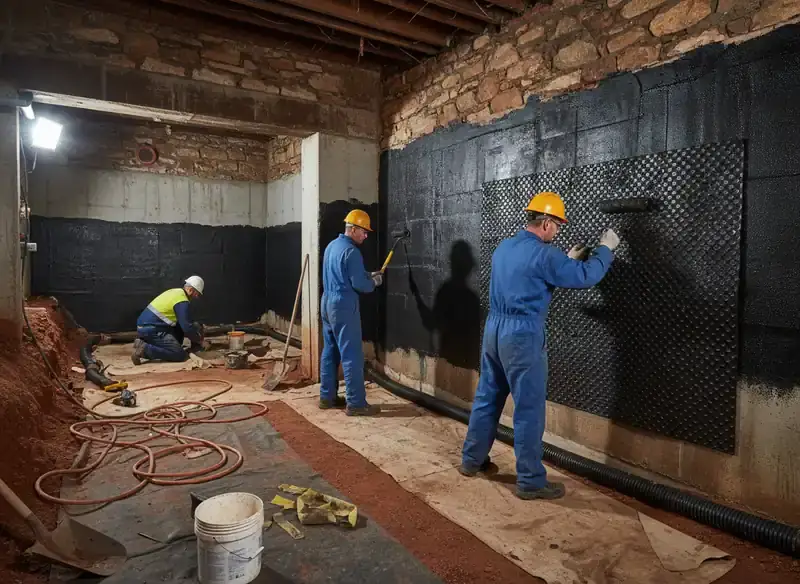
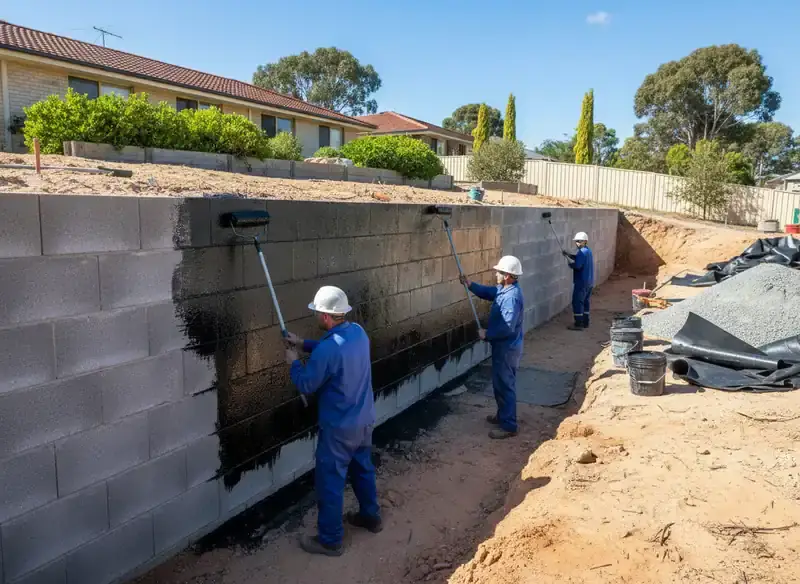
- On a below-ground wall or floor: basement or retaining wall waterproofing.
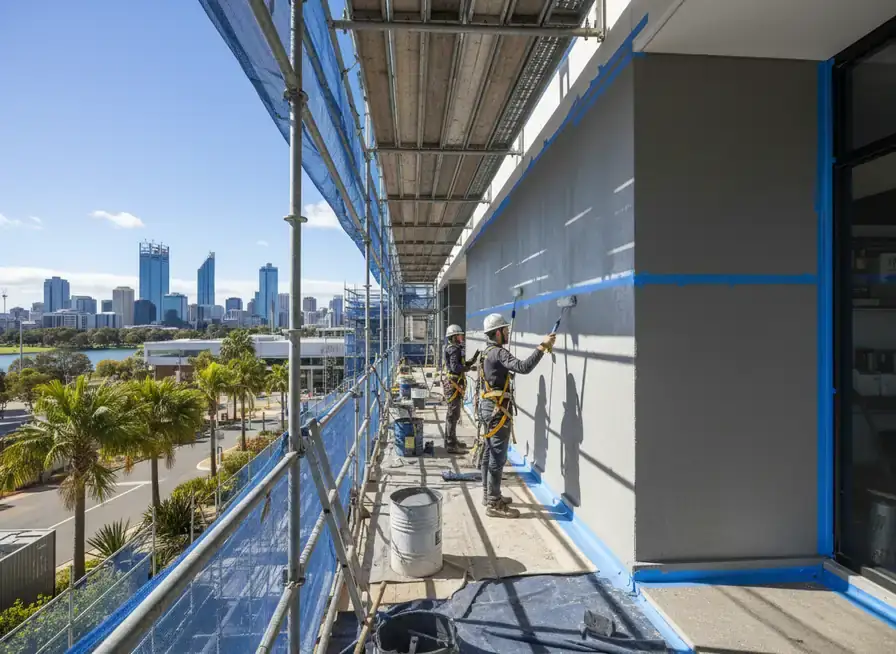
- On an outside wall exposed to rain: exterior wall waterproofing.
Bathroom and shower work: repair or redo?
Three wet area services can sound alike, but each one suits a different situation.
You're renovating or building
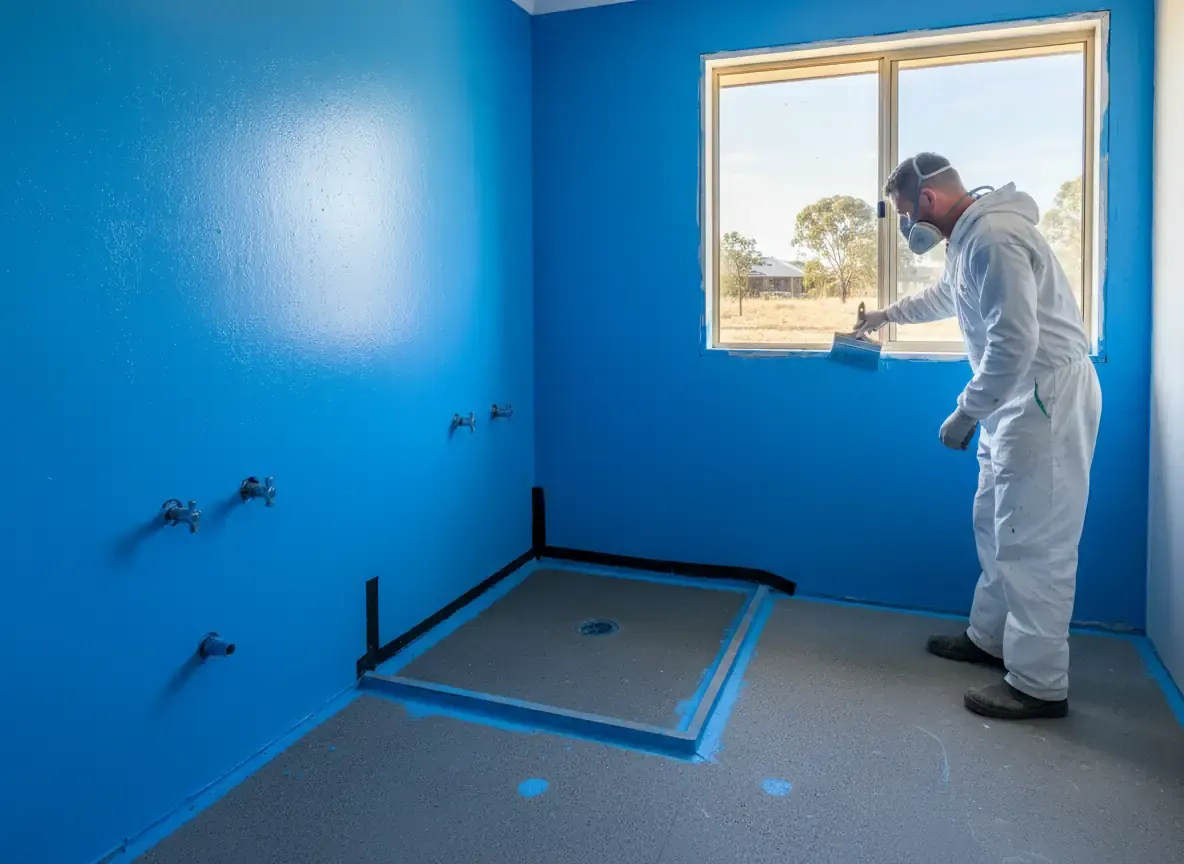
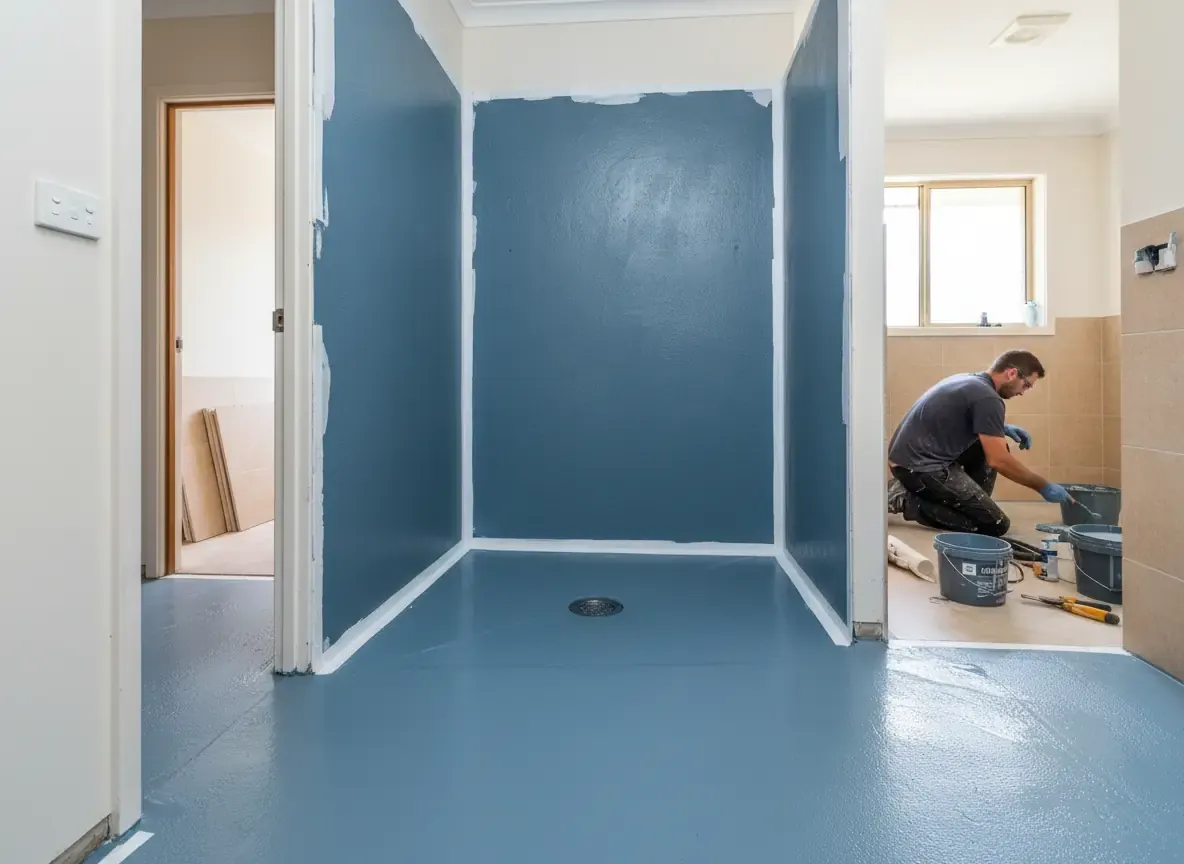
Bathroom waterproofing covers the whole room as part of a renovation or new build, with the membrane laid before tiling. Shower waterproofing is the narrower job when only the shower recess is being rebuilt.
Your existing shower is leaking
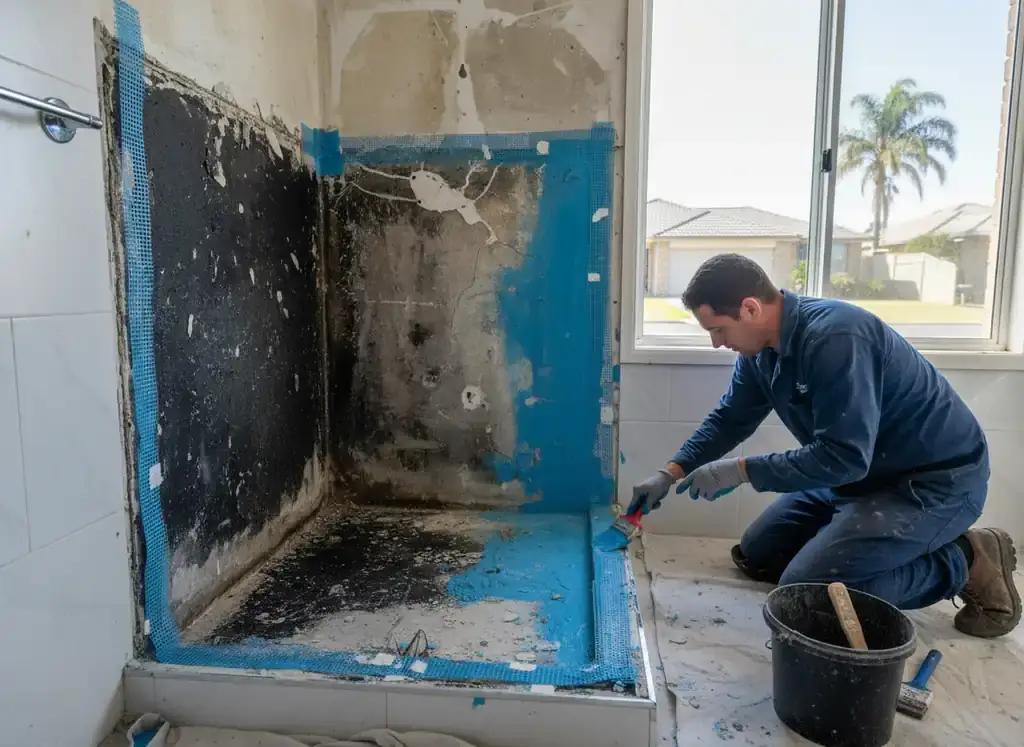
Leaking shower repair is for a shower that was working but now lets water through, often showing up as stains on the far side of a wall or grout that stays dark long after use. Some leaks can be fixed without stripping the whole recess. Others mean the membrane has failed and the shower needs redoing, which a contractor can confirm on inspection.
If the leak could be coming from a pipe or drain rather than the membrane, that part of the job goes to licensed professionals who handle plumbing.
Outside and below-ground waterproofing
Balconies and decks
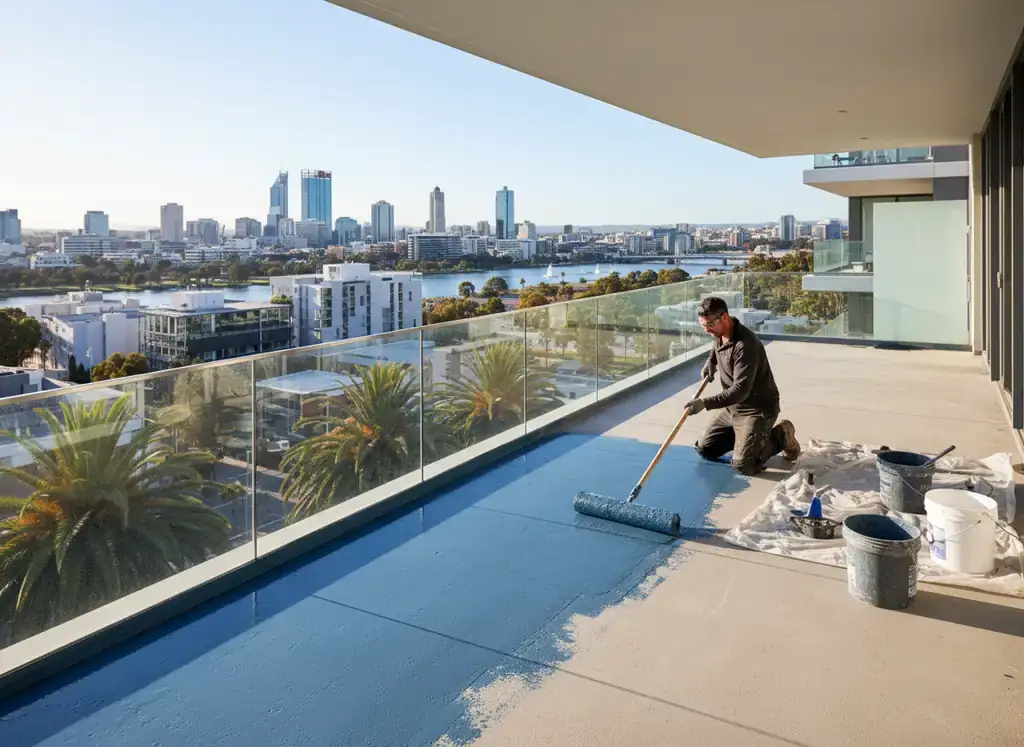
A balcony sitting over a living space or garage needs a membrane that copes with sun, rain and foot traffic. Water marks on the ceiling below are a common reason people go looking for this service.
Basements and retaining walls
These walls hold back soil, so moisture pushes in from behind rather than splashing on the surface. Basement waterproofing protects rooms below ground. Retaining wall waterproofing protects the wall itself and anything built against it, which matters most when a wall is going up or being rebuilt.
Exterior walls
Exterior wall waterproofing suits masonry or rendered walls letting moisture through after heavy rain, particularly on walls facing the prevailing weather.
Standards behind the membrane
Indoor wet areas in a house have to meet the National Construction Code's performance requirements, and a membrane used under the wet area housing provisions has to comply with AS/NZS 4858. For above-ground external areas such as balconies, where the external waterproofing provisions apply, the membrane standards are AS 4654.1 and AS 4654.2. Work that doesn't need a building permit still has to meet the relevant building standards, so a cheaper job shouldn't skip the membrane.
Before you sign a contract
If your contract is covered by WA's Home Building Contracts Act, the contractor has to give you the prescribed Notice for the Home Owner before you sign. On a covered waterproofing contract, the deposit can't be more than 6.5%, and each progress payment should only cover work already done or materials already supplied. Defects you report in writing within four months of practical completion must be fixed at no cost to you.
Pick the closest match
If you're unsure, choose the service that matches the room or structure where the damage appears, and note how long it's been there and whether it gets worse after rain or showering. That detail helps a contractor work out whether you need a repair or a full redo.