About retaining wall waterproofing in Perth
A retaining wall holding soil against a house can often be waterproofed and drained until the face dries out. The fix depends on what sits behind it, such as packed soil or a planter box fed by reticulation. Water pressing on the back needs a membrane to stop it and drainage to carry it away.
Signs a retaining wall or planter box is letting water through
Dark patches that linger after rain or watering, white powdery salts on the face, peeling paint and a musty adjoining room all point to moisture moving through the wall. The white salts are efflorescence: minerals carried out of the concrete or masonry as water evaporates from the surface.
Membrane and drainage: why one rarely works without the other
A membrane on the soil side keeps water out of the wall, but it cannot hold back unlimited pressure. Drainage behind the wall, such as free-draining gravel and a slotted pipe at the base, lets that water escape. Treating only the visible face often leaves damp trapped inside the concrete.
The dig-out decision for a retaining wall
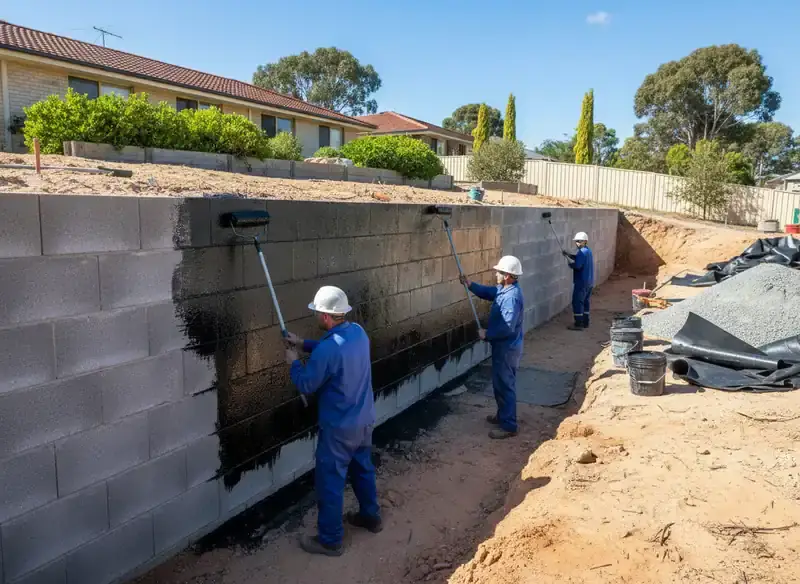
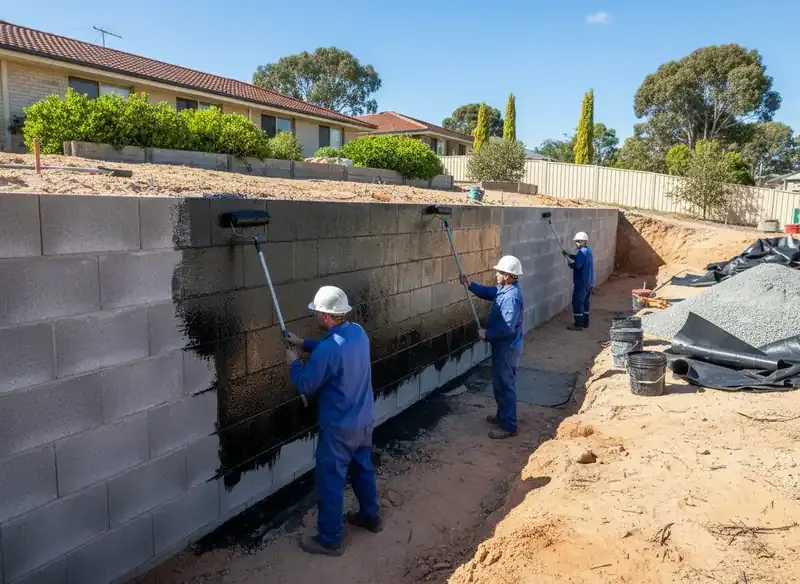
Where the back of the wall can be exposed, a membrane applied there with new drainage is usually the direct fix. Where digging out is impractical, options worked from the front face, such as penetrating treatments and coatings over a sound concrete substrate, can reduce seepage but manage moisture rather than stopping it at source.
Planter boxes against the house
A planter built against a house wall keeps soil wet right up to the brickwork. The inside needs a membrane carried up past the soil line, a drainage layer and an outlet so water does not sit. Where the planter shares a wall with a room, damp inside that room is often the first clue.
Permits, drainage connections and paying for the work
Rebuilding a wall may need a building permit from the local council unless the work is exempt, and exempt work must still meet building standards. Drainage plumbing work is for licensed professionals, and the local council can advise on stormwater connections. Under a covered home building contract, the deposit is capped at 6.5 per cent.
Next step for a weeping retaining wall
Note roughly how long and high the wall is, whether it is concrete, block or brick, and what sits behind it: lawn, a garden bed, a planter or a neighbour's yard. Add your suburb and whether damp shows inside the house, and the wall can be assessed with that picture in mind.
What retaining wall waterproofing can cover
Retaining wall membrane and drainage
Exposing the soil side of the wall, applying a membrane and installing gravel and a slotted pipe so water drains away instead of pressing through.
Planter box waterproofing
Lining the inside of a planter with a membrane carried above the soil line, plus a drainage layer and outlet, to protect the house wall beside it.
Front-face treatment
Penetrating treatments and coatings applied to the visible face where excavation is impractical, to reduce seepage and staining on a sound wall.